Advances in Brazil's energy regulatory environment
15 years of partnership with the National Electric Energy Agency (ANEEL)
Mel II Wind Farm, RN. Credits: Neoenergia Archive.
From planning to innovation:
The partnership between the Brazil-Germany Cooperation for Sustainable Development and ANEEL
The growing challenges of climate change demand adaptations and innovative technologies in all sectors – including the electricity sector. In Brazil, with a focus not only on reducing emissions but also on the security of energy supply, diversification of the electricity matrix is already a reality. The country has expanded the use of intermittent renewable sources (e.g. wind, photovoltaic, solar), with an emphasis on local and decentralised generation, known as Distributed Generation.
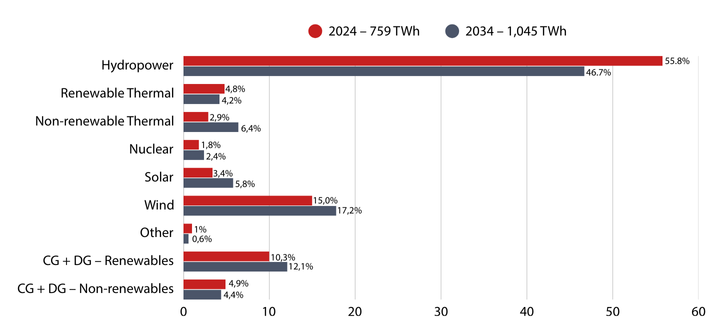
The advance of renewable sources in Brazil is significant: in 2009, wind, solar and biomass energy represented only 7.4% of installed capacity, according to the Ten-Year Energy Plan ^1. In 2024, they will reach 28.7%, with projections of 35.1% by 2034 ^2.
Xavantes hybrid power plant, RR. Credits: Tauan Alencar/MME
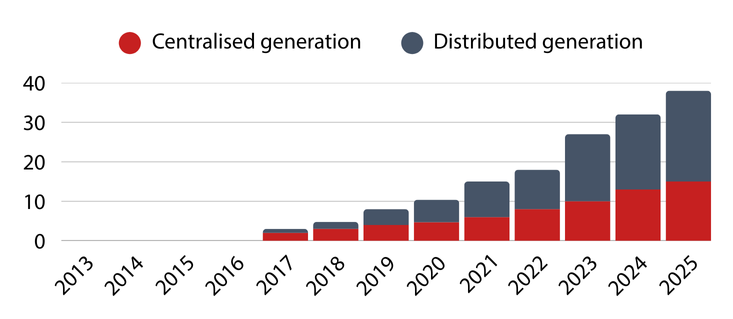
Photovoltaic solar energy has grown significantly: between 2012 and 2024, its installed capacity jumped from 7.2 MW to 52.1 GW, avoiding the emission of more than 63 million tonnes of CO2. In the same period, Brazil rose from 15th to 6th place in the global ranking of installed capacity in wind energy ^3.
Another advance is the dissemination of pilot projects and knowledge about Energy Storage Systems (ESS) – or BESS (Battery Energy Storage Systems) – considered a priority for the sector. These systems store energy generated by renewable sources and make it available during periods of low production, such as at night in the case of solar energy. According to the Brazilian Association of Energy Storage Solutions (ABSAE), each gigawatt of battery power can generate annual savings of up to R$ 900 million.
Electric car at the Itaipu Binational Hydroelectric Power Plant, PR. Credits: Soninha Vill/ GIZ
Growth in electromobility is also remarkable: in 2024, the number of light electric vehicles registered increased by 89%, according to the Brazilian Electric Vehicle Association (ABVE), reflecting a change in consumer behaviour.
ANEEL is consolidating its role as a regulator in this context, ensuring legal certainty and providing appropriate instruments for the expansion of infrastructure and modernisation of the sector with transparency and sustainability.
The partnership between ANEEL and the German Federal Ministry for Economic Cooperation and Development (BMZ), through Deutsche Gesellschaft für Internationale Zusammenarbeit (GIZ) GmbH, which began about 15 years ago, has been essential for the continued modernisation of the sector and acceleration of the energy transition. Several cooperation projects contribute to a more robust regulatory environment, encouraging renewable sources, innovation and the promotion of energy efficiency.
This publication presents an overview of the trajectory of Brazil-Germany Cooperation for Sustainable Development in the regulatory environment for electricity in Brazil, highlighting initiatives, results and impacts. The content is organised around five thematic areas: Distributed Generation, Modernisation of the Electricity Sector, Energy Efficiency, Research, Development and Innovation (PD&I), and Diversity, Inclusion and Equity. Finally, it points to future prospects and reinforces the commitment to a more climate-resilient, fair and environmentally responsible electricity sector.
PARTNERSHIP IN NUMBERS
The Legal Framework for Distributed Generation in Brazil
Caption: Solar panels installed on the roof of a residence in Rio de Janeiro, RJ. Credits: Tobias Kuehner/GIZ.
Photovoltaic system inverters in operation. Credits: Soninha Vill/GIZ
Solar panels installed at Pituaçu Stadium, Bahia. Credits: Shirley Stolze/Neoenergia
Photovoltaic Energy
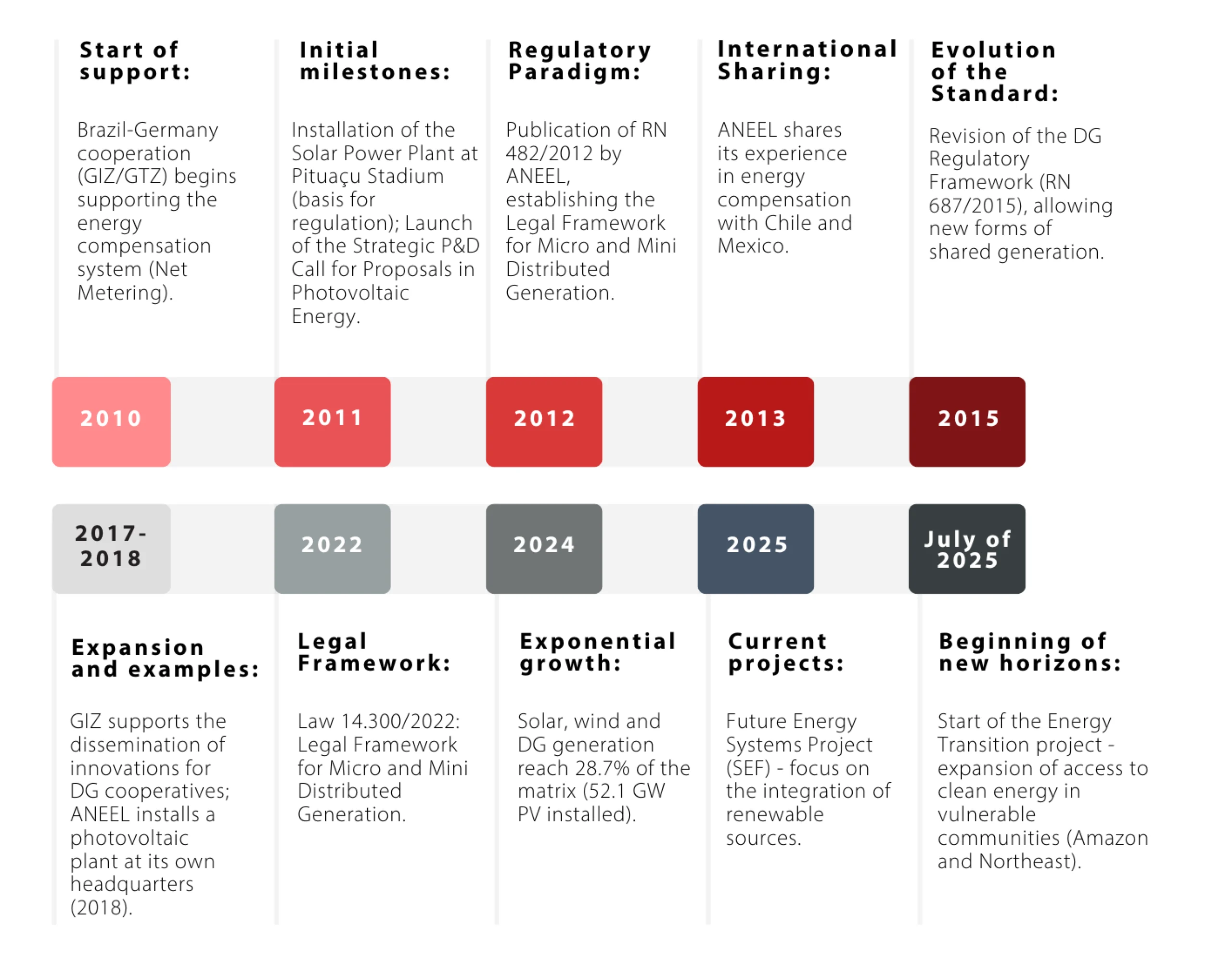
Under the coordination of GIZ, technical studies based on international standards were developed, technical visits to other countries were made, and pilot experiments with the compensation system were conducted. One of the highlights was the photovoltaic solar plant at the Pituaçu Stadium, installed by the Bahia State Electricity Company (COELBA), now Neoenergia, through the Energy Efficiency Programme (PEE), regulated by ANEEL.
Inaugurated in 2011, the Pituaçu power plant served as the basis for the regulatory proposal published by ANEEL the following year. With PEE funds, the concept was expanded by the Solar Stadiums project, conceived by the Institute for the Development of Alternative Energies in Latin America (Instituto Ideal), with installations at the Maracanã (Rio de Janeiro), Mineirão (Minas Gerais), Arena Pernambuco (Pernambuco) and Mané Garrincha (Distrito Federal) stadiums.
Normative Resolution 482/2012 (REN 482/2012) and Legal Framework for Micro and Mini Distributed Generation (482/2012 (REN 482/2012)).
Educational tools were developed to support project implementation, such as the Photovoltaic Microgenerator Guide (100,000 copies distributed) and the Solar Simulator, which guides consumers in sizing a PV system.
Based on the experiences of the Solar Fund, a joint initiative of GIZ, Instituto Ideal and Grüner Strom Label, a study assessed the need for redundant requirements, such as the maintenance of a device for external shutdown of energy systems, the Visible Disconnection Device (DSV) – equipment used in electrical networks to safely interrupt the flow of energy. The assessment showed that inverters have a similar function in the event of network shutdown by distributors, which led to the exclusion of the requirement, simplifying standards and boosting the sector.
In 2013, ANEEL shared its experience in creating energy compensation systems at an event that brought together representatives from government agencies in Brazil, Chile, and Mexico in the Mexican capital.
Educational booklets. Credits: Soninha Vill/ GIZ
Solar panels installed at the ANEEL headquarters in Brasília, DF. Credits: ANEEL Archive
New generation modalities
With the revision of the DG Regulatory Framework in 2015 (Normative Resolution 687/2015), new modalities were included: remote self-consumption, multiple consumer units and shared generation via consortia and cooperatives. To disseminate them, GIZ joined forces with the German Cooperative Confederation (DGRV) and the Organisation of Brazilian Cooperatives (OCB) to develop a Business Model and a Guide for the Establishment of Distributed Photovoltaic Generation Cooperatives – a simulator for solar energy cooperatives. Rounds of presentations on the new modalities took place in various regions of the country between 2017 and 2018.
In 2018, as a practical example, ANEEL installed, with the support of GIZ, a photovoltaic plant at its headquarters in Brasilia, with the goal of reducing annual electricity consumption by up to 20%.
Solar panels installed at the Maracanã Stadium, Rio de Janeiro. Credits: Florian Kopp/GIZ
Consolidation of legislation
With the growth of the sector, there was a need for greater legal and regulatory certainty. In 2022, Law 14.300/2022 was enacted, establishing the Legal Framework for Distributed Generation. The main change was the creation of a new tariff structure for the compensation model, better reflecting the costs and benefits of DG to the electricity system.
The reformulation of the legislation took place in two stages:
- The first, completed in May 2024, defined guidelines for calculating the new tariff, considering transmission, distribution, generation, losses and locational signal, according to the National Energy Policy Council (CNPE).
- The second, under the responsibility of ANEEL and with support from GIZ, will apply the guidelines and perform the calculations to define the new compensation model.
Innovation and Continuous Modernisation of the Electricity Sector
AI-generated image depicting the evolution of lighting. Credits: Google Gemini
Illustrative image for the topic Modernization of the Sector.
The introduction of new technologies, combined with growing demand and diversification of the energy matrix, has driven the modernisation of the Brazilian electricity sector, with legislative advances and strategic planning in various guiding areas.
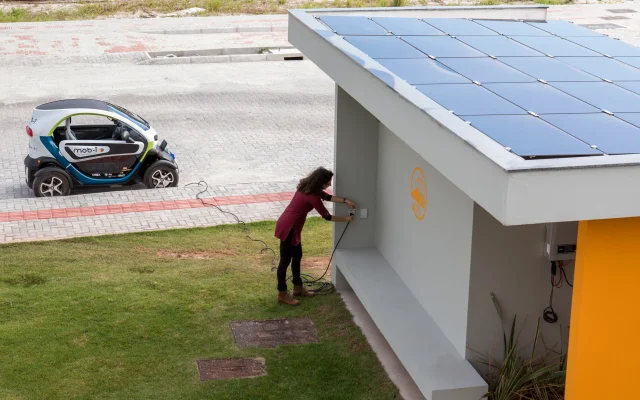
Charging an electric vehicle. Credits: Soninha Vill/GIZ
Electromobility
On the subject of electromobility, Normative Resolution No. 819/2018 regulated the recharging of electric vehicles by public distribution concessionaires and licensees. GIZ, within the scope of the Efficient Propulsion Systems (PROMOB-e) project ^5, supported the process with technical visits to Germany and exchanges between Brazilian and German government experts, contributing to the design of the regulations. According to ABVE, 25% of municipalities already have recharging infrastructure, and more than 15,000 electric charging stations are expected by 2025.
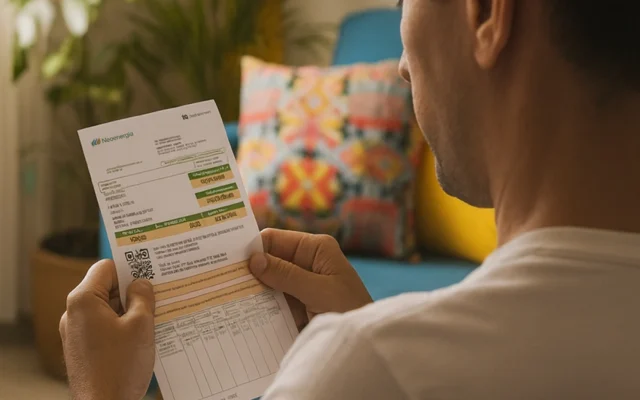
AI-generated image – Google Gemini
Opening up the energy market
GIZ also supported the mapping of improvements to integrate new agents into the Free Contracting Environment (ACL). According to data from the Brazilian Association of Energy Traders (ABRACEEL), the regulatory changes resulted in market expansion and underpinned the proposal for full market opening under discussion in 2025, allowing all consumers to purchase energy on the free market. Another highlight was the support for defining criteria for reducing or limiting generation in real time, with the report ‘Energy Systems of the Future: Regulatory solutions for reducing or limiting generation in real-time operation’ serving as the basis for Public Consultation No. 045/2019.
Electrical panel. Credits: Soninha Vill/ GIZ
Distributed Energy Resources (DERs)
With the growth of decentralised sources – those that generate and store energy, such as solar generation and battery storage systems – GIZ coordinated the study Redefining the Distribution Business Model, which proposed regulatory alternatives to improve the business environment, coordinated planning of DG for grid connection, new remuneration for distributors and new contracting models. Other studies supported the insertion of REDs through proposals for regulatory models (such as demand response, virtual power plants
and microgrids), which informed ANEEL’s discussions with various stakeholders.
GIZ also supported the Subsidy Request No. 11/2021, which investigated regulatory models for distributed generation, energy storage, electric vehicles and ancillary services, based on international best practices. And in 2024, it also coordinated the ‘Smart Meters’ study, which assessed the impacts of integrating REDs into the distribution system, following Decree No. 10,411/2020, which establishes the guidelines for conducting Regulatory Impact Analysis (AIR) and the parameters established by ANEEL Organisation Standard No. 40/2013. The result was the opening of Subsidy Request No. 013/2024 aimed at improving the study ‘Evaluation of regulatory models for the implementation of smart metering systems in the Brazilian distribution system.’
Tucuruí transmission line. Credits: Ricardo Botelho/MME
Registration Units and Asset Lifespan
Another advance was the revision of Normative Resolution 674/2015, which updated the coding of Registration Units (UCs) and the definition of the useful life of electrical assets. GIZ supported ANEEL in identifying the UCs to be revised, in the methodology for changing the coding or useful life, and in preparing a final report. All material was made available in the ANEEL Library.
Transmission line. Credits: Tauan Alencar/MME
Prospects
With rapid technological developments and changes in consumption and generation models, it is essential that regulation keeps pace with these transformations. Cooperation between ANEEL and GIZ has been decisive in ensuring an up-to-date regulatory environment with legal certainty that is conducive to innovation, contributing to a competitive, sustainable and inclusive sector. The modernisation process is ongoing, paving the way for further advances.
Electricity sector modernisation:
- Smart metering
- Electric vehicle regulation
- Energy Efficiency Auction
- Ancillary Services and Asset Coding
- Free Energy Market
- Storage Regulation
- Distributed Energy Resources
Energy Efficiency
Floating solar power plant in Fernando de Noronha, Pernambuco, Brazil. Credits: Vitor Souza/GIZ
Monitoring and data collection
At the end of the Renewable Energy and Energy Efficiency ^6 – ProFREE project in 2015, GIZ began a new phase of cooperation with ANEEL focused on energy efficiency. The first step was to develop a database to monitor the Energy Efficiency Programme (PEE). GIZ contributed with a programme management methodology that optimised internal workflows linked to the PEE and the Research and Development Programme (P&D), resulting in increased productivity and greater energy savings.

Monitoring room. Credits: Soninha Vill/ GIZ
Wind farm, CE. Credits: Soninha Vill/GIZ
Auctions
In 2019, with the Project Energy Systems of the Future, GIZ supported the structuring of the 1st Energy Efficiency Auction, contributing to the Public Consultation that guided the drafting of the tender. The auction aimed to contract entities to develop Energy Efficiency actions in the city of Boa Vista (Roraima, Brazil), focusing on reducing energy consumption. Although the initiative did not continue until 2025, its technical basis draws on the experience accumulated since 2009 with the country’s first wind energy auction, which contracted 71 projects totalling 1,805.7 MW. This auction inaugurated a competitive and transparent model that boosted the wind sector from 2GW to 30GW, with investments exceeding US$ 48.6 billion.
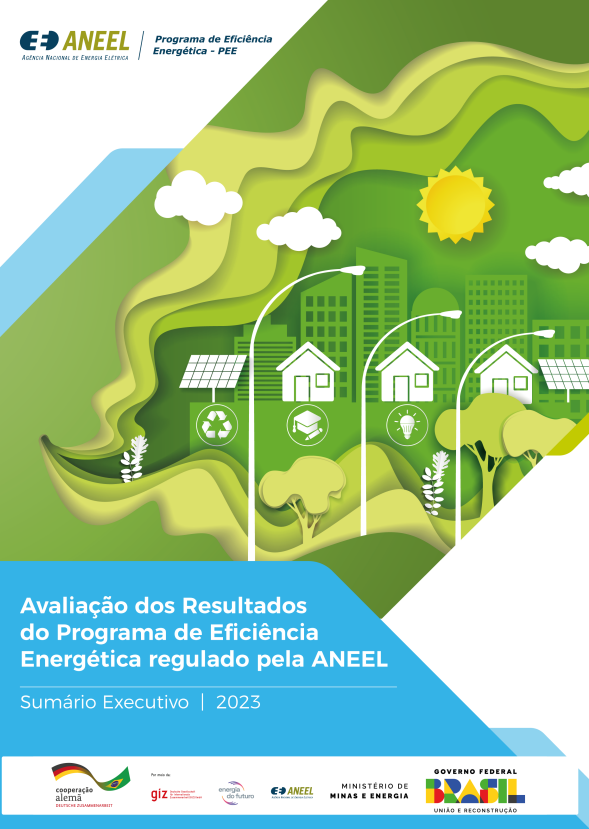
Evaluation of the Energy Efficiency Programme (PEE)
Between 2021 and 2023, also with the Project Energy Systems of the Future ^7, the first evaluation of the PEE in 20 years was carried out. The work addressed the implementation, governance, results and impacts of the programme, revealing significant benefits – especially among low-income consumers – both in energy savings and job creation. The conclusions support guidelines for improving public policy and have influenced new cooperation projects, beyond ANEEL.
Bolivian Energy. Credits: Carlos Alba/GIZ
Trilateral Cooperation
Between 2018 and 2020, trilateral cooperation between Germany, Brazil and Bolivia enabled the Andean country to learn about successful models of distributed generation and labelling standards – product certification for the use of the energy efficiency label. The project Energy Efficiency (in the industrial sector and labelling) and Distributed Generation in Bolivia resulted in a national energy efficiency strategy, formalised by Supreme Decree. In 2023, a new trilateral cooperation was formed between Brazil, Germany and Honduras to expand the population’s access to electricity, especially in rural areas. The project Luz para a Vida (Light for Life) was inspired by the advances made in Brazil, which, in eight years, expanded coverage and access to electricity services from 74% in 2005 to 97.6% in 2013, according to the Latin American and Caribbean Energy Information System (sieLACOLADE). The initiative has technical support from ANEEL and funding from the German and Brazilian governments through the Brazilian Cooperation Agency.
Research, Development and Innovation
Robotic arm truck. Credits: Neoenergia Archive
Photovoltaic Power Plant in Várzea da Palma, MG. Credits: Ricardo Botelho/MME
The National Electric Energy Agency (ANEEL) developed its Research, Development and Innovation Programme (PDI Estratégico – Strategic PDI) with the aim of leveraging innovation in the Brazilian electricity sector through focused and strategic initiatives. The programme facilitates the creation of an environment conducive to technological progress, the dissemination of a culture of innovation and the improvement of technical capabilities, encouraging cooperation between companies, universities and research centres. Based on principles that value the generation of scientific and technological knowledge aimed at sustainable development, the PDI is founded on the pillars of reducing bureaucracy, promoting transparency, and encouraging innovative solutions with effective results. Since 2011, GIZ has been supporting ANEEL in public calls for proposals, strengthening the joint commitment to modernisation and innovation in the energy sector.
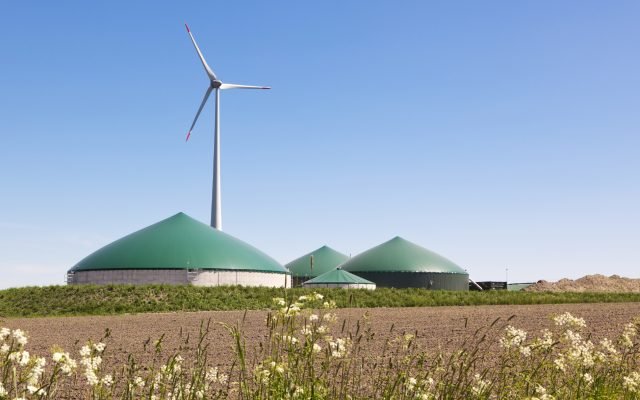
Image: iStock Photo
Biogas
Under the Biogas PDI, which supported 16 projects with a total volume of EUR 106 million, GIZ provided technical support to eight of them, with investments of around EUR 34 million. The projects presented solutions for energy recovery from agricultural and urban waste, with applications integrated into pig farming, the sugar and alcohol industry and basic sanitation systems – promoting environmental, energy and economic gains.
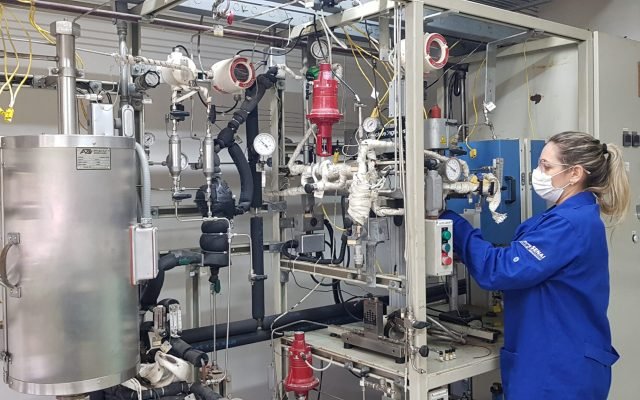
Photovoltaic Power Plant in Várzea da Palma, MG. Credits: Ricardo Botelho/MME
Solar Energy
In 2011, Brazilian and German experts supported a public consultation for proposals focused on photovoltaic energy for the first time. The programme enabled distributors to invest their P&D resources in research related to the implementation of photovoltaic plants between 0.5 and 3 MWp. As a result, several generating units and plants were implemented, which were pioneers both regionally and technologically. The initiatives contributed to the generation of knowledge and paved the way for the growth of this solar source in the Brazilian energy matrix. The initiative arose after a technical visit by ANEEL to Germany, organised by GIZ, which promoted the exchange between Brazilian and German experts.
Solar thermal power plant. Credits: GIZ Archive
Heliothermal
With the aim of studying the potential of heliothermal energy – internationally known as Concentrated Solar Power (CSP) – ANEEL launched a new PDI in 2015. CSP stands out for its ability to store heat to generate electricity or for use in thermal processes, even in the absence of sunlight. This feature contributes to grid stability and increases the capacity factor and dispatchability (adjustment and control of electricity production on demand) of power plants. In total, 77 companies expressed interest in financing projects in this area. As a result, Brazil’s first heliothermal plant was inaugurated, located in the Porto Primavera complex in Rosana, in the state of São Paulo.
Robotic arm truck. Credits: Neoenergia Archive
Modernisation of PDI Programmes
In 2021, GIZ supported ANEEL in the process of improving and revising the procedures of the Research, Development and Innovation Programme (PROPDI). The process resulted in new regulations with guidelines for innovation and technological development in the electricity sector, which formed the basis for the approval of the Five-Year Strategic Innovation Plan (PEQuI) 2023-2028 and the Inovælétrica 2040 scenario project.
In recognition of this work, ANEEL received the Gold Seal of Good Regulatory Practices, awarded by the Ministry of Development, Industry, Trade and Services (MDIC), which recognises regulatory acts aligned with national and international best practices.
Samples of Sustainable Aviation Fuel or SAF. Credits: GIZ Archive
Green Hydrogen
In 2024, through the H2Brasil project, GIZ acted as an intervening entity in the Strategic Public Consultation for Hydrogen in the context of the Brazilian Electricity Sector. GIZ monitored all stages of the process, from the initial assessment to the implementation and analysis of the results of the selected projects.
Diversity, Inclusion and Equity
Professionals carry solar panels. Credits: Soninha Vill/GIZ
A professional measures electrical current in a panel. Credits: Soninha Vill/GIZ
Diagnostics
In 2023, ANEEL, with the support of GIZ, conducted the Women in the Electricity Sector survey, focusing on agents involved in Research, Development and Innovation (P&DI) projects under its management. The study revealed a scenario of gender inequality in the sector: only 20% of the people involved in these projects were women, concentrated mainly in administrative and general service functions. Meanwhile, 78% of leadership positions and 89% of operational positions were held by men.
Teams from ANEEL, GIZ, and MME during the Women in Energy event in 2022. Credits: GIZ Archive
Strengthening equity in the sector
With the aim of contributing to a more equitable, diverse and inclusive regulatory environment, since 2022 the Brazil-Germany Cooperation for Sustainable Development has been supporting the strengthening of ANEEL’s institutional capacities in this area. Based on a Strengths, Weaknesses, Opportunities and Threats (SWOT) analysis, an action plan was developed that included training activities, communication campaigns and a review of internal policies and practices.
The main result was the creation of the DiversANEEL committee, dedicated to issues of Diversity, Inclusion and Equity. GIZ directly supported the drafting of the internal regulations and planning of the committee’s activities, consolidating a permanent structure within the Agency.
Installation of photovoltaic modules at a SENAI training center. Credits: GIZ Archive
Training and education of multipliers
The training of leaders and teams was also prioritised. In 2024, more than 100 managers and committee members participated in training on inclusive leadership and affirmative actions. In 2023, Human Resources (HR) professionals received specific training to improve diversity practices, with a focus on inclusive recruitment and people management with an equitable perspective.
Teams gathered for a workshop on best practices in gender and human rights in Brasília, DF. Credits: Carolina Marcusse/GIZ
Inclusive language
In 2022, ANEEL representatives on the Gender, Race and Equity Committee of the Ministry of Mines and Energy and related institutions (COGEMMEV) participated in training on Inclusive and Non-Sexist Language (LINS). As a result, with support from GIZ, ANEEL developed an Internal Guide aimed at promoting inclusion through the conscious use of words or linguistic structures, with the goal of reversing situations of discrimination and concealment of socially marginalised groups, seeking to ensure visibility and representation for all social groups. In addition, annual roundtables were held to exchange best practices with COGEMMEV, ONS and EPE, with the aim of promoting joint learning and stimulating synergy between public institutions on the themes of diversity, inclusion and equity.
Looking to the Future
Changes and updates to Brazil’s energy regulatory environment represent important advances for the country’s energy transition. Improvements to regulations for decentralised energy generation and distribution, the expansion of energy trading models, and the strengthening of mechanisms for integrating renewable energies into the National Interconnected System (SIN) have been pillars of the new scenario that the country intends to build.
Since 2017, installed solar photovoltaic capacity has grown exponentially, from approximately 100 MW to more than 50 GW in 2025, driven by a more robust regulatory framework and greater predictability. In the field of commercialisation, the free market has grown significantly, currently representing more than 35% of total electricity consumption in the country, with greater competitiveness and flexibility for consumers. In addition, the implementation of new mechanisms to integrate renewable sources, such as improvements in energy auction rules and the introduction of new flexibility contracting models, has allowed for more efficient incorporation of sources such as solar and wind, which together already account for more than 40% of Brazil’s electricity matrix.
The growth in the share of Variable Renewable Energy Sources (VRES), both in centralised generation and as Distributed Energy Resources (DER), has profoundly transformed the operation of the Brazilian electricity system. Dispatchable sources, especially hydro and thermal, have been decreasing their share in the sector, with projections of 61% versus 39% of installed VRE capacity, as indicated in the 2031 Ten-Year Energy Expansion Plan.
However, ensuring security and quality in the supply of electricity remains a challenge that requires structural actions in planning, operation and regulation of the sector. The expansion and integration of new technologies must be aligned with social development and environmental responsibility, ensuring a fair and equitable transition. This requires a regulatory environment that is both solid and attractive to the necessary investments.
The Brazil-Germany Cooperation for Sustainable Development and ANEEL remain committed to the continuous improvement of the electricity sector, with initiatives to leverage the use of new technologies for energy generation and storage, increasing system flexibility and creating mechanisms for new business models based on the digitisation and decentralisation of generation.
The success of the energy transition in Brazil depends on the continuity of these efforts. Strengthening the partnership between Brazil and Germany is essential to maintaining the country’s leadership in clean energy generation and the development of innovative solutions for the future of the electricity sector.
Caption: Technician in front of the Floating Solar Power Plant at the Xaréu Reservoir, in Fernando de Noronha, PE. Credits: Lucas Franzoni/GIZ
Advances in Brazil's energy regulatory environment
15 years of partnership with the National Electric Energy Agency (ANEEL)
Expedient
Director of the Energy and Urban Transformation Cluster
Markus Francke
Director of Energy Systems of the Future Project
Daniel Almarza
Editorial Coordination
Érica Santos
Helena Coutinho
Featured Photo
Mel II wind farm, Rio Grande do Norte, Brazil. Credits: Neoenergia Archive.
Technical Review
Technical staff from the National Electric Energy Agency (ANEEL)
Authors of the Publication
Érica Santos
Helena Coutinho
Paula Scheidt
Renata Bennet
Infographics and Layout Design
GIZ Brasil e GIM Digital
Energy Systems of the Future Project is part of the Brazil-Germany Cooperation for Sustainable Development and is implemented by the Deutsche Gesellschaft für Internationale Zusammenarbeit (GIZ) GmbH and the Ministry of Mines and Energy with funding from the German Federal Ministry for Economic Cooperation and Development (BMZ).
Brasília, January 2026.
